FAQ
Windows one-click setup for all clients (recommended, with changelog) 
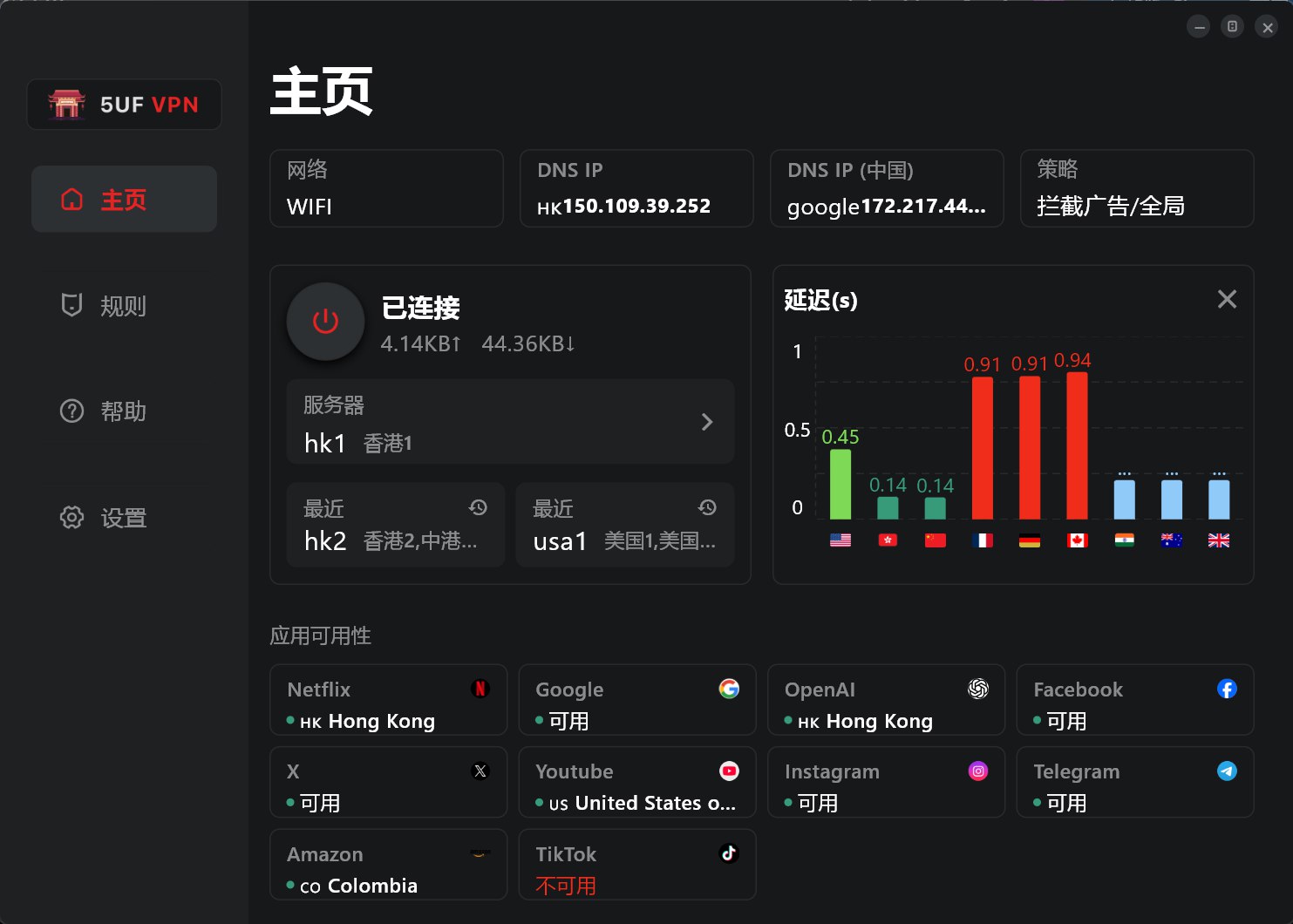
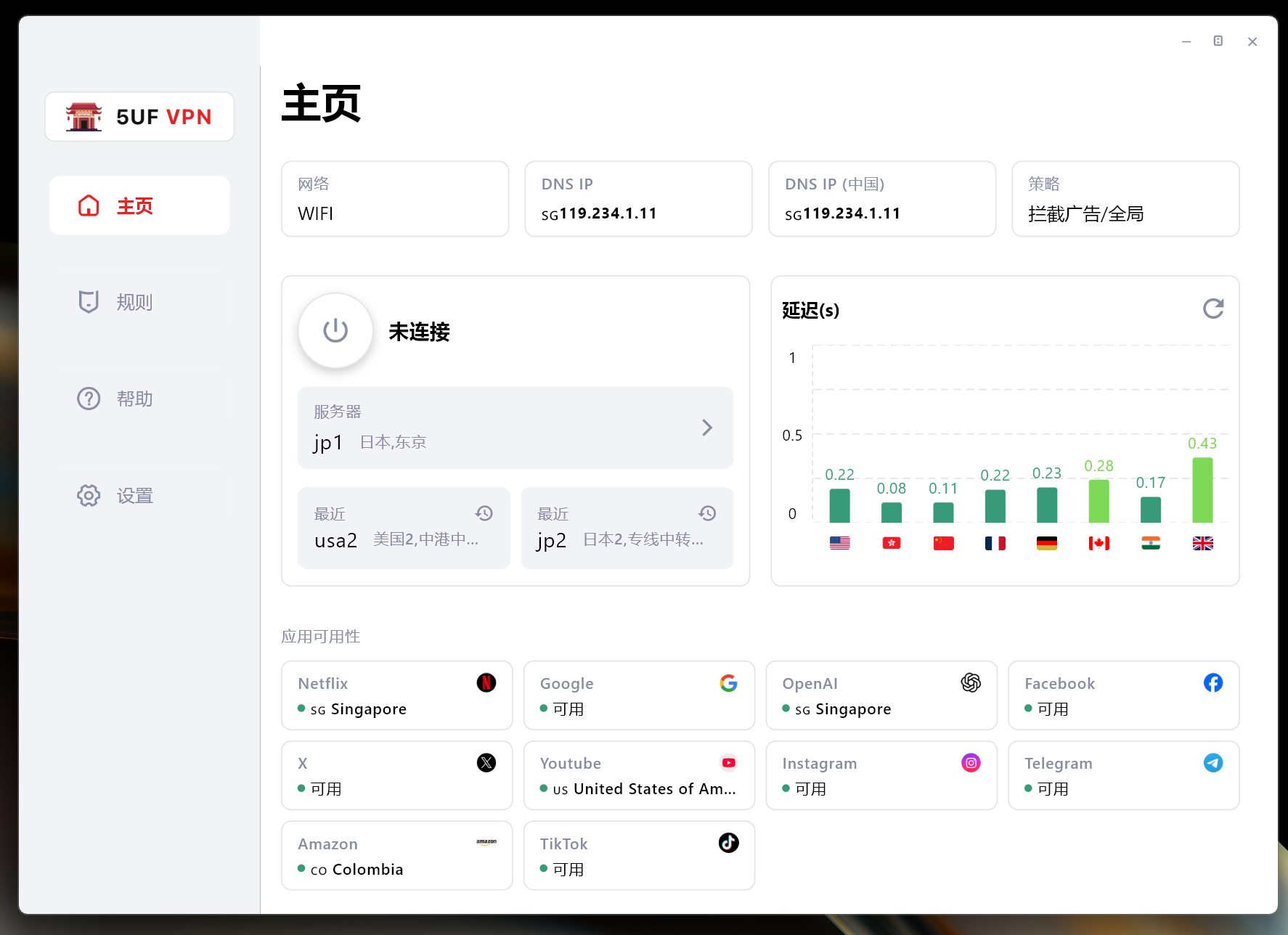
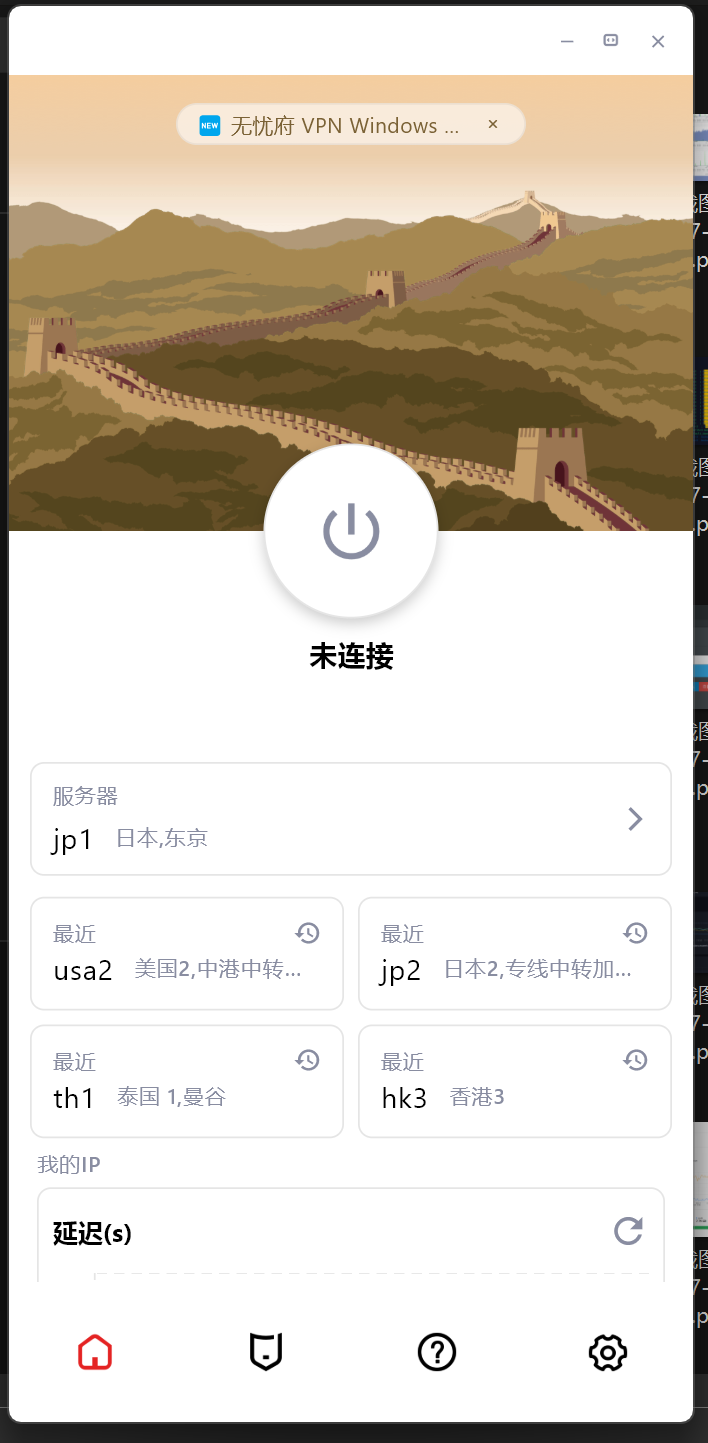
最新版 4.1 客户端,修正了多个BUG,支持更多协议,连接更稳定,速度更流程,有效保护数据免受篡改与窥探。

Changelog:
2014年12月11日 1.07版 对外公布,之前我们内部测试多次,多个版本,所以首个对外的版本是1.07
2014年12月18日 1.08版 修正了最小化窗体后,会自动弹出窗口的问题。
2015年01月07日 1.09版 修正更新域名后不能使用的问题。
2015年02月11日 2.0.0.0版,增加了N多功能
解决了部分杀毒软件报病毒的问题,是因为压缩的问题,现在已经不压缩。
增加了更换DNS的功能
增加了永久路由功能
增加了添加路由和删除路由时显示百分比
测速时重新加载服务器列表
增加了恢复hosts文件的功能,部分用户因为修改了这个文件,造成部分网站不能访问
生成支持文件(方便我们的帮部分用户分析问题)
优化了部分操作逻辑,比如点击退出时提示是否清空路由,是否最小化,是否断开VPN等问题。
2015年02月15日 2.0.0.1
修复程序退出的时候,右下角的状态栏图标没有消失的问题,鼠标要放一下会自动消失,现在这个问题已经修复。
修复程序启动的时候,如果没有网络出错的问题,现在已经提示正常
win8启动的时候不再自动使用修复sstp功能,只在需要的时候在工具菜单那里运行下
2015年04月29日 2.0.0.2
修复了xp系统下,如果本地网卡是使用自定义DNS,使用我们的工具里设置google dns等后还原后会丢失原来的dns配置的问题。
增强了性能,现在不同的服务器,不同的类型都使用独立的拨号链接,互不影响,解决了以前如果前一个vpn断不开,后面一个不能拨号的问题,(以前是必须重启机器才能恢复)。
2015年09月18日 2.0.0.3
修复深圳部分小运营商运行时,初始化的问题。
增加PPTP是否加密的选项。
在设置工具里增加快速打开“网络连接”。
在没有拨号的情况下退出软件提示“退出会断开VPN" 的提示的逻辑问题。
2015年09月23日 2.0.0.4
断开和连上时在线人数自动加减1,解决断线后需要重新运行程序的问题。
2015年12月23日 2.0.0.5
修复多个连接数时,有时候判断超过连接数错误bug。
针对国内DNS环境不稳定的情况,优化了部分地区有时候 初始化 问题,现在更加稳定。
取消自动创建的拨号链接功能,现在用户的VPN连接里不会出现我们程序里自动配置的VPN连接。
除了L2TP协议外,360不再提示需要修改pbk文件。
2015年12月26日 2.0.0.6
修复L2TP协议时,重新启动时无法拨号的bug。
修复PPTP加密重新启动时无法记忆的问题。
2016年1月6日 2.0.0.7
修复在测速列表双击服务器选择不了的bug。
windows10需要禁用掉IPV6,才能解决DNS污染的问题.
2016年2月24日 2.0.0.8
修复windows10用户l2tp不能使用的问题.
增强部分网络情况下初始化失败的问题,增强了更多网络环境下的可用性.
windows10用户拨号的时候提示修复禁用IPv6.
修复生成技术支持文件的bug,同时把这个按钮放在登陆页面,确保没有登陆时也能生成技术支持文件.
修复部分网络下断开连接不生效的问题,提示已经断开,事实上没有断开,造成多个连接重拨.
修复不停的点击断开按钮,在线数会减少的bug,事实上不会真减少.
2017.4.20 3.0
完全重新架构的新版本,使用C++重新开发,更加高效
新增加:
直接支持openvpn
多语言系统中不再乱码(但还都显示是简体中文)
全新界面
增加和删除国内路由更快了,可以瞬间完成,以前需要很久的百分比,且增加过程中占用cpu比较高。
连接更多稳定可靠,旧版本在某些环境中l2tp,ikev2不能稳定使用,需要重启机器才行。
更多网络环境中可以用,以前的版本中可能会出现“登陆失败”,新版本已经对这种情况做了更多兼容处理。
2017.4.21 3.1 3.2
修复iKev2模式下,默认网关没有设置的bug
更改点击X为隐藏窗体,更熟悉国人的操作习惯,如果要退出,请在右下角托盘那里,右键退出。
3.2 修复下载配置文件不能更新的bug
2025.7.28 日 4.0
全新架构
2025.8.8 日 4.1
修复了界面还有一些链接问题
Why does Block network need a network extension on macOS but not on Windows?
Block network has to make sure that a specific app can't open any connection while the VPN is off, even after you quit 5UF or restart. That requires the operating system to block outgoing connections per app, and the two systems provide this differently.
Windows: built in, nothing extra to install
Windows has a built-in network filtering framework (the Windows Filtering Platform, which the Windows firewall is built on) that accepts per-program blocking rules. 5UF already installs a background service with administrator rights, which adds the blocking rules to the Windows Filtering Platform, so no extra driver or extension is needed.
macOS: only possible through Apple's network extensions
• The built-in macOS firewall only handles incoming connections; it can't stop an app from connecting out.
• The low-level packet filter (pf) only knows IP addresses and ports; it can't tell which app opened a connection.
• Apple requires third-party software that filters network traffic per app to use Apple's Network Extension framework. So 5UF installs a small network filter extension: macOS tells it which app each connection comes from, and it allows or blocks it.
Why you have to approve it yourself: a network extension can see network connections, so for security Apple requires the user to turn it on in System Settings and allow it to filter network content. No software can do this step for you. The 5UF extension is notarized by Apple, only blocks apps you turned Block network on for, and doesn't record or change other apps' traffic.
Not installed unless you use it: the extension is installed only the first time you turn on Block network. Using the VPN, per-app routing or pinned routes doesn't need it. To stop using it, turn off 5UF VPN in System Settings → General → Login Items & Extensions → Network Extensions.
For installation steps and common messages, see "On desktop, how do I stop an app from going online without the VPN?".
On desktop, can I make an app always exit through one specific VPN server?
Yes. App rules in the Windows and macOS apps can lock an app to a single VPN exit: whatever server you choose on the home screen, that app always exits through the server you picked, so websites always see the same country and the same server IP.
Useful for: trading apps, ad dashboards, cross-border e-commerce and social accounts that are sensitive to the login IP. Frequent IP changes can trigger risk checks, verification or account bans; a fixed exit avoids that.
How to set it up:
1. Open Apps (Ctrl+3, or ⌘3 on macOS), click Add app and choose the app.
2. Click its Route ("Follow current server" by default) and choose the server to pin.
3. When the route shows "Exit xxx", you're done.
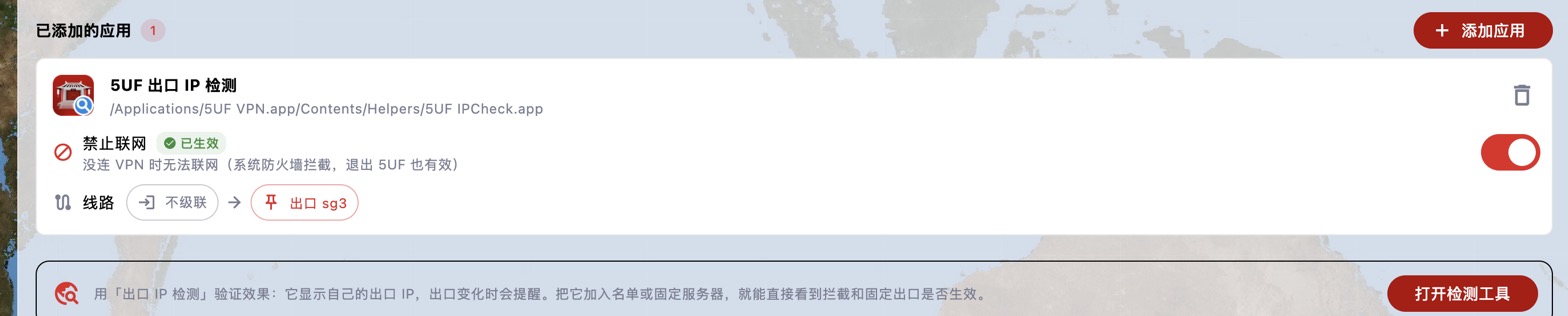
For extra safety, also turn on Block network for the app. It can then only go out through the chosen server:
• VPN connected: only through the pinned exit, even if you change servers on the home screen.
• VPN off or 5UF closed: no network access at all, so it never signs in with your real IP.
• Pinned server unreachable: the app can't connect, instead of silently switching to another server or going direct.
To verify: add the Exit IP Check tool to the list and pin it to the same server; the IP it shows should be that server's IP. The screenshot below shows the tool after it was moved from a Vietnam server to Singapore sg3: it reports that the exit IP changed.
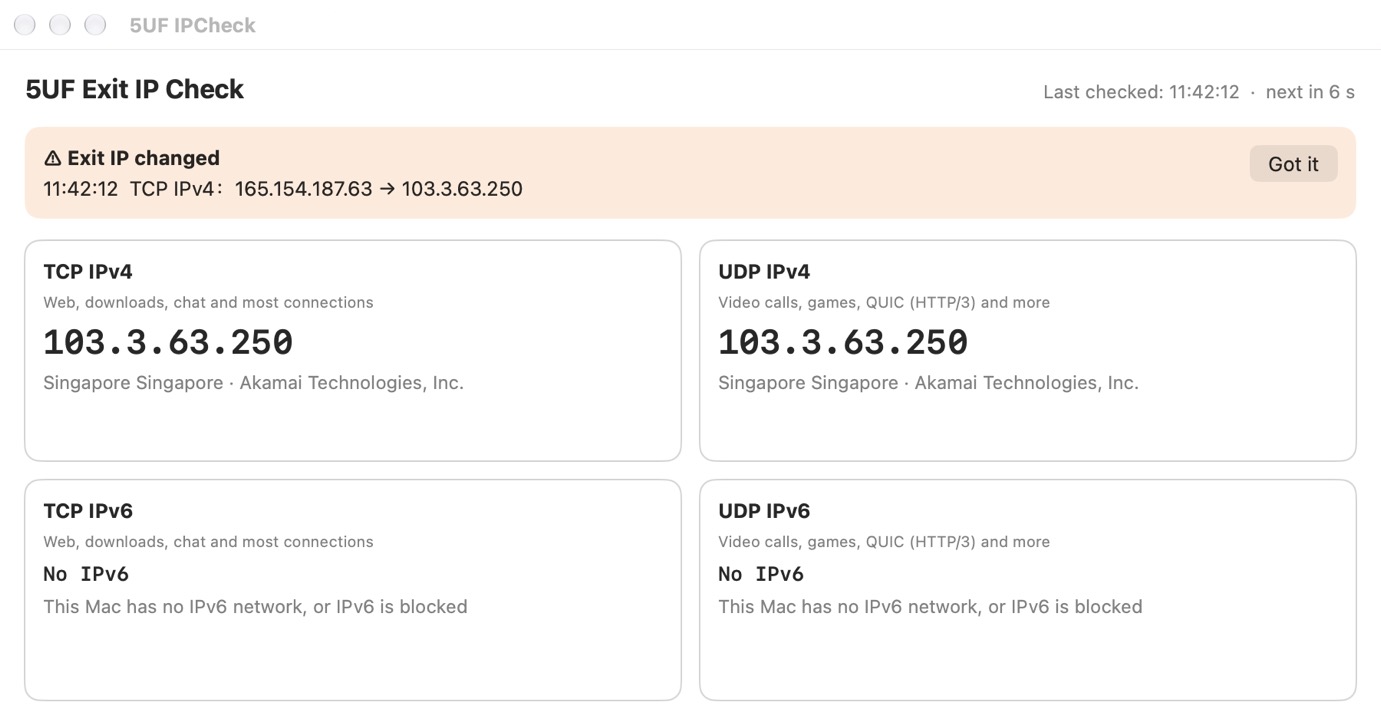
If the pinned server is later removed from the server list, the Apps page tells you so; choose another server. To chain two servers, see "What is a two-hop proxy (chaining)? How do I use it on desktop?".
What is a two-hop proxy (chaining)? How do I use it on desktop?
What it is: normally your traffic goes "your computer → one server → website". With a two-hop proxy (chaining), it goes through two servers: "your computer → first hop → exit server → website".
• Websites see the exit server's IP.
• The first hop only sees encrypted traffic and doesn't know what you visit.
• The exit server doesn't see your real IP, only the first hop.
When it helps:
• Using it from mainland China but needing an IP in a specific country: connecting directly to a distant country may be unstable. Use a relay server optimised for mainland China (tagged as relay in the server list) as the first hop and a server in the target country as the exit, so you get both stability and the right exit location.
• Better privacy: no single server knows both who you are and what you visit.
How to set it up (Windows / macOS): chaining is set per app on the Apps page.
1. Add the app on the Apps page.
2. Click its Route and choose the exit server first.
3. A "No chaining" button then appears on the left. Click it and choose the first-hop server.
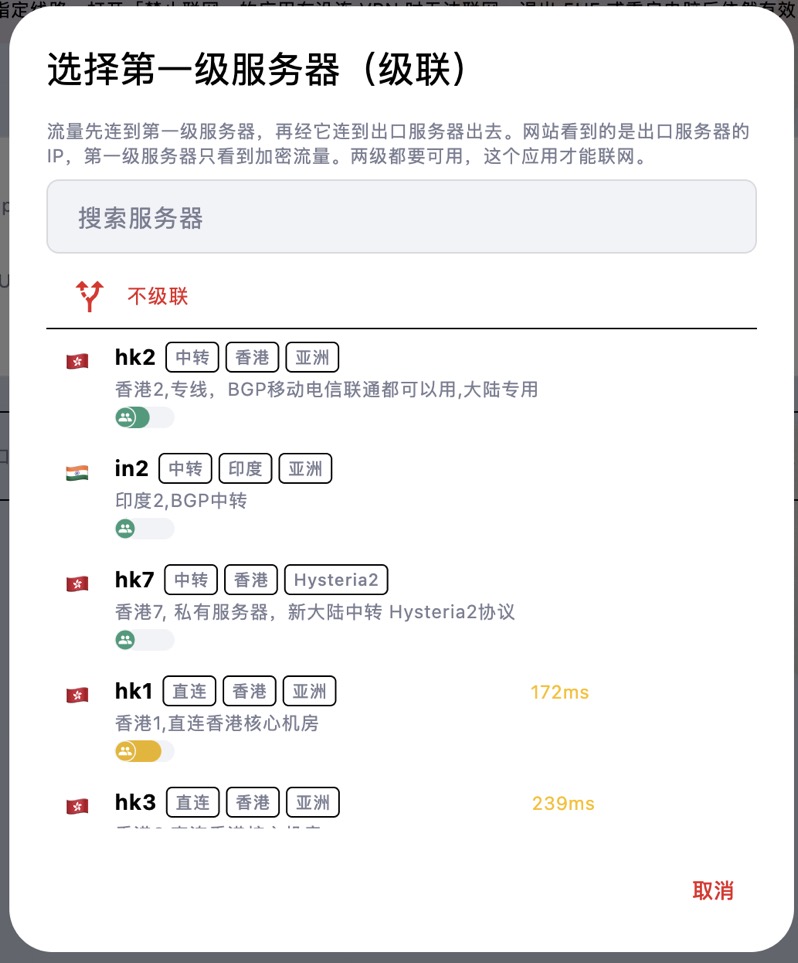
Once set, the route shows "First hop xxx → Exit xxx":
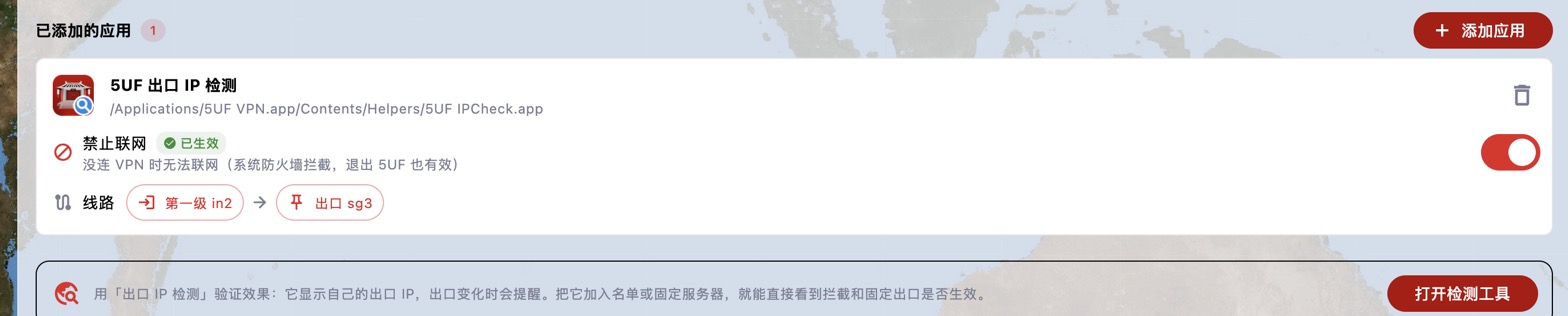
Notes:
• Both servers must be available for the app to go online. If either fails, the app can't connect; it won't switch routes automatically.
• The extra hop adds some latency, so use it for apps that need a particular exit location rather than for everything.
• To remove the first hop, choose "No chaining"; to go back to normal, set the exit to "Follow current server".
• Use the Exit IP Check tool to confirm the exit IP is the exit server's IP.
The Windows app says it crashed or exited unexpectedly last time. What should I do?
After 5UF crashes or exits unexpectedly, the new Windows app shows a prompt the next time it starts, so you can report the problem. A normal shutdown or upgrade doesn't trigger it.
Buttons:
• View details: see when it was detected and the related logs.
• Export: save the crash record and logs as a zip file (5uf-crash.zip) to a location you choose.
• Dismiss: close the prompt for this occurrence.
Recommendation: if it happens often, click Export, then submit a ticket with the zip attached and say roughly what you were doing. URLs and similar private details are removed from the exported logs, which are used only for troubleshooting.
The Windows app also restores the system proxy automatically after an unexpected exit, so browsers no longer lose internet access. If pages still won't open, reopen 5UF or restart the computer.
On Windows, what if the Microsoft Store or other UWP apps can't go online?
By default Windows doesn't let UWP apps such as the Microsoft Store, Mail or Weather use the local system proxy. In system proxy mode, their requests may be blocked by Windows before they reach 5UF, so they won't load or keep spinning. Turning on the virtual network adapter (TUN) as well doesn't remove this restriction.
Check and repair:
1. Open 5UF and go to Settings → Microsoft Store / UWP network check.
2. The app checks the system proxy, whether the selected app may use the local proxy, and whether Microsoft services are reachable.
3. Choose the affected app (the Microsoft Store by default).
4. If it says local proxy access isn't allowed yet, click Repair and click Yes in the Windows administrator prompt.
5. When it confirms that access is enabled and verified, fully close the app and open it again.
Repair only allows the selected app to reach local services; existing exemptions and routing rules are kept. If the Microsoft Store isn't listed, open the Store once and check again.
If some Microsoft services are still unreachable after repair, the problem isn't app permissions: check the server, DNS and routing rules, try switching to virtual adapter (TUN) mode in Settings and restarting the affected app, or use AI Diagnosis.
What keyboard shortcuts does the desktop app have?
The new desktop app can be used entirely from the keyboard. The macOS app now has a menu bar with all common actions; Windows / Linux use Ctrl shortcuts. The full list is under Help → Keyboard shortcuts.
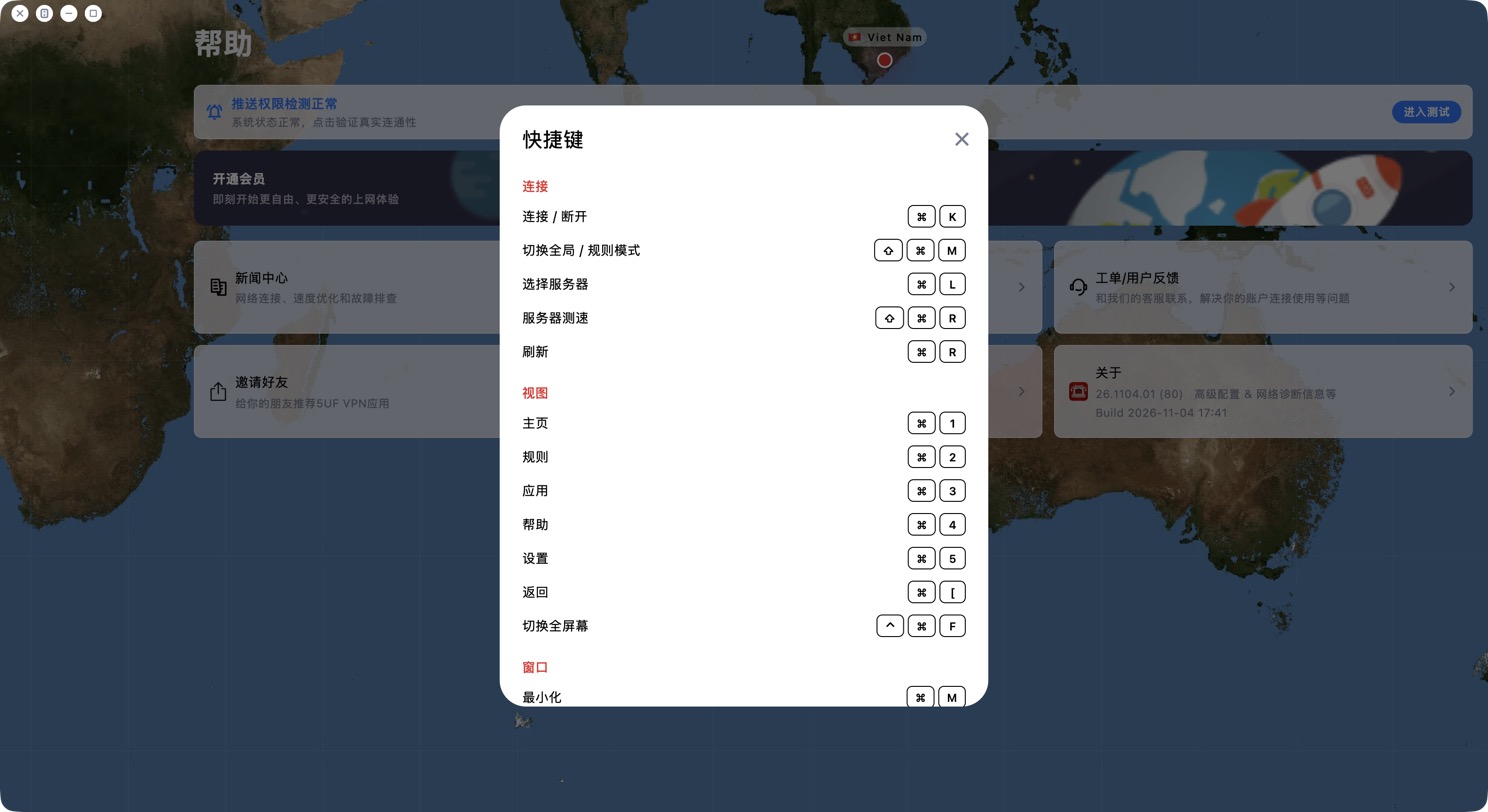
Common shortcuts (⌘ on macOS, Ctrl on Windows / Linux):
• Connect / disconnect: ⌘K
• Switch Global / Rule mode: ⇧⌘M
• Choose server: ⌘L
• Test server speed: ⇧⌘R; Refresh: ⌘R
• Pages: ⌘1 Home, ⌘2 Rules, ⌘3 Apps, ⌘4 Help, ⌘5 Settings
• Back: ⌘[
• Toggle full screen: ⌃⌘F (macOS)
General: Esc closes a dialog or goes back; Tab moves between buttons (Shift+Tab goes back) and shows a focus outline; Enter or Space activates the selected button.
What is "Block IPv6 traffic"? Should I turn it on?
The desktop apps (Windows / macOS) have a new Block IPv6 traffic switch on the right side of Settings. It is on by default.
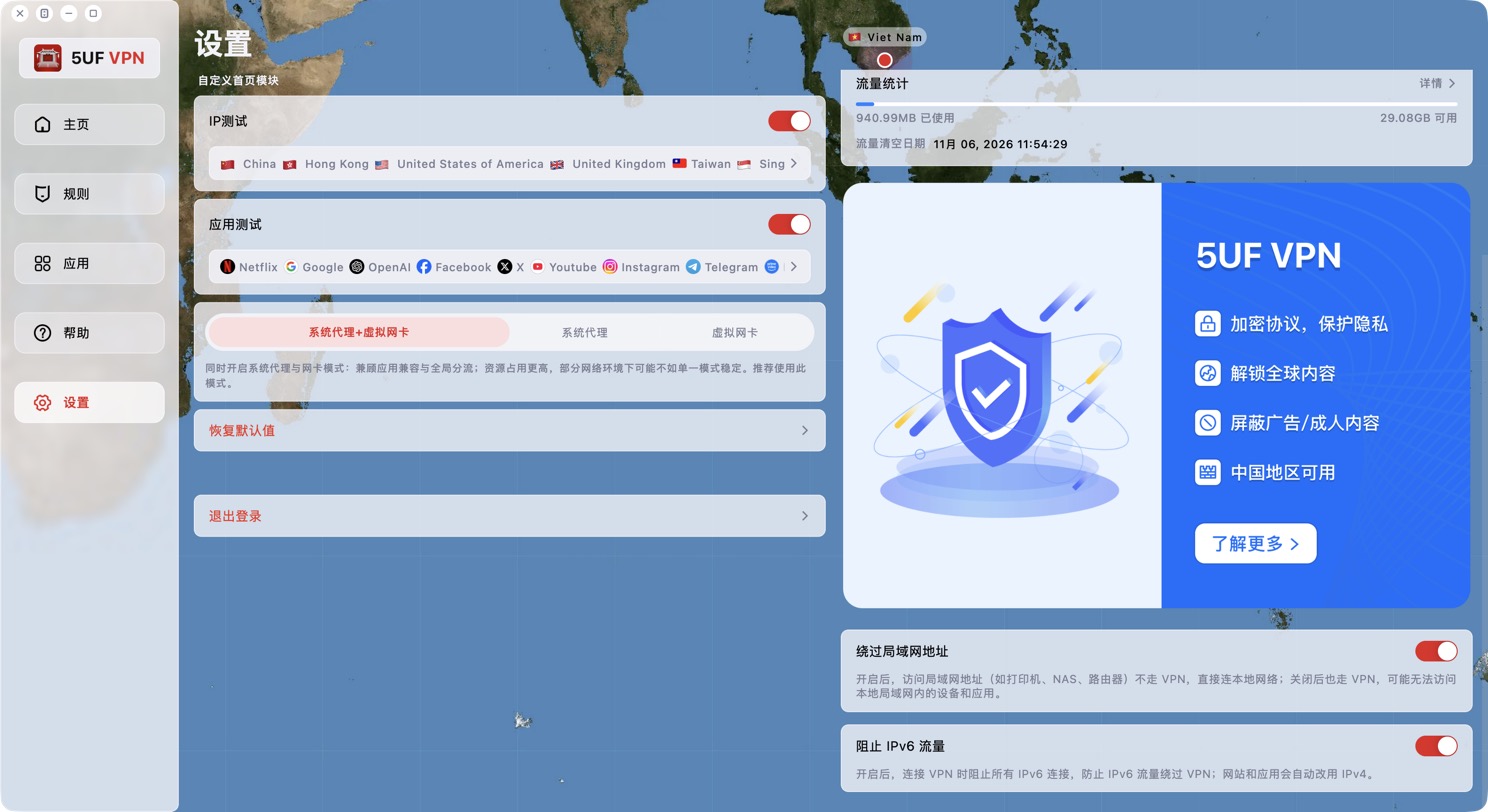
What it does: while the VPN is connected, all IPv6 connections are blocked so IPv6 traffic can't bypass the VPN and expose your real network address. Websites and apps automatically fall back to IPv4, so you normally won't notice any difference.
Recommendation: keep it on. Only turn it off if you really need to reach a service over IPv6. Changing it closes existing connections and takes effect immediately.
With it on, Exit IP Check shows "No IPv6" for IPv6, which is expected. The "Bypass LAN addresses" switch on the same page decides whether local devices such as printers, NAS and routers are reached directly; it's normally left on too.
What do the four cards at the top of the new desktop home screen mean?
The new desktop home screen has a row of cards at the top that show the current network status at a glance. Click any card to open the related settings.

1. DNS: whether DNS resolution is normal or poisoned, and whether the provider and location of the overseas and China DNS match what's expected. Poisoning detected while the VPN is off is normal. See "How can I change DNS to reduce DNS pollution issues?" for DNS settings.
2. Policy: Global or Rule mode, plus the filters that are on, such as ad blocking and IPv6 blocking.
3. Apps: apps that bypass the VPN (Global mode) or apps that use the VPN (Rule mode); "All apps use the VPN" if none are set.
4. Core: whether the core is working, plus connection counts:
• Green: normal connections (data received).
• Yellow: waiting (opened less than 10 seconds ago, no data yet).
• Red: timed out (open for more than 10 seconds with no data). Many red connections mean a server or network problem; try another server or use AI Diagnosis.
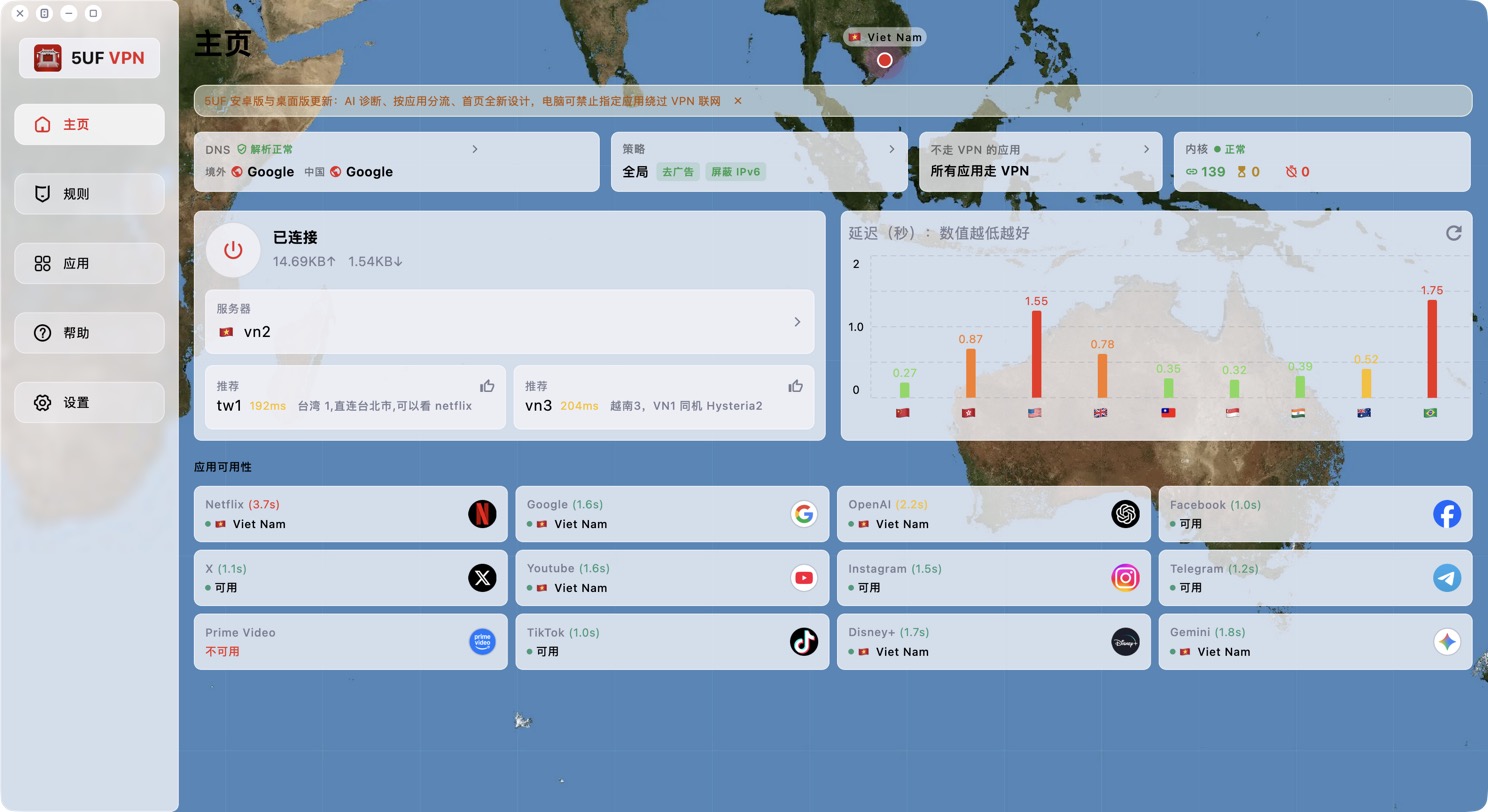
The desktop window can now also be maximized, with the map filling the screen; double-click an empty part of the map to switch between maximized and a comfortable size.
How do I use Exit IP Check to see an app's exit IP?
The Windows and macOS apps include a small tool, 5UF Exit IP Check, to verify that the VPN and your Apps page settings really work.
How to open it: click Open checker at the bottom of the Apps page.
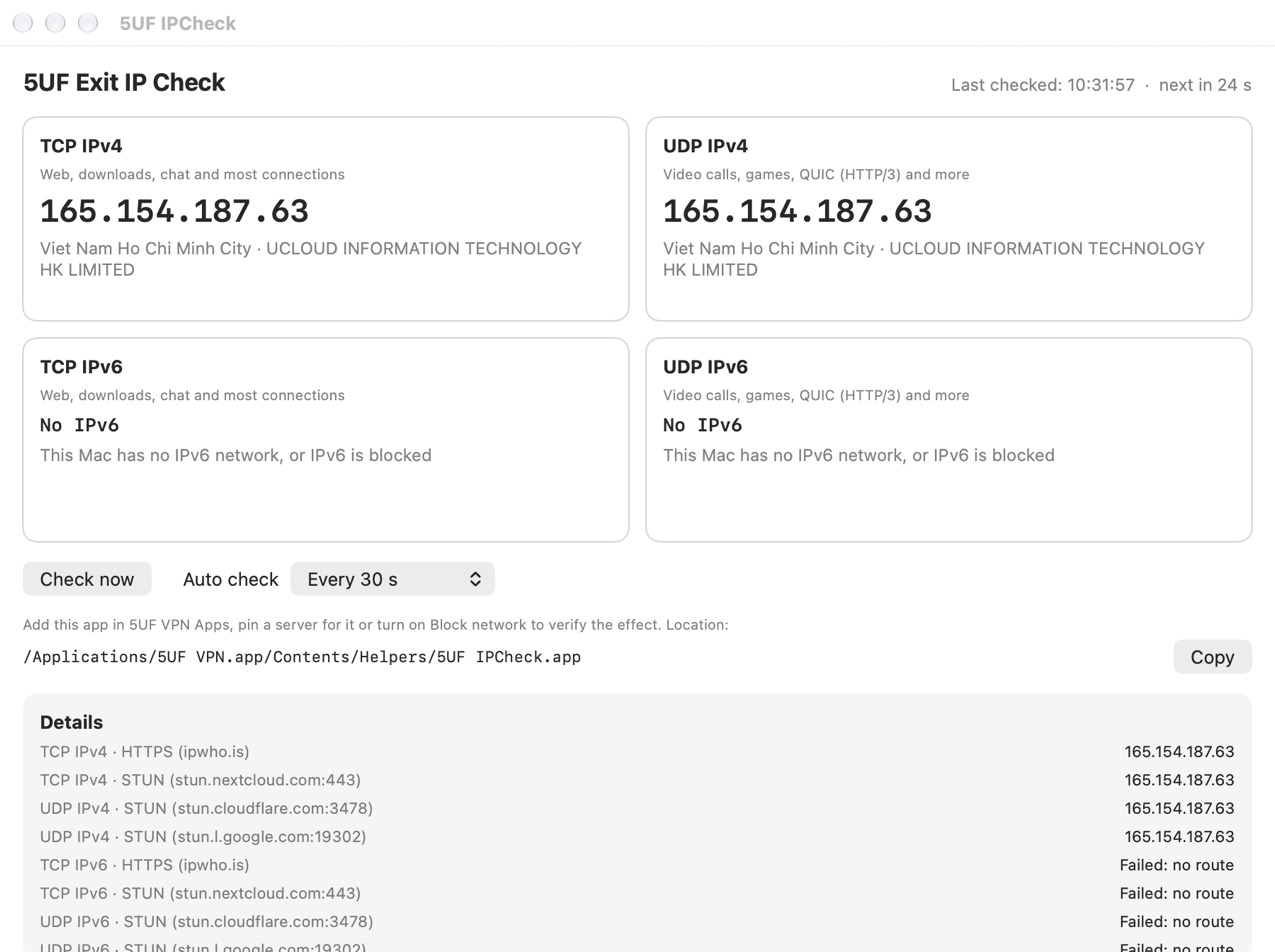
What it shows:
• TCP IPv4 / TCP IPv6: the exit IP for web, downloads, chat and most connections, with country, city and ISP.
• UDP IPv4 / UDP IPv6: the exit IP for video calls, games, QUIC (HTTP/3) and more.
• "No IPv6": this computer has no IPv6 network, or IPv6 is blocked (for example by Block IPv6 traffic). This is normal.
• "No network access": blocked, or the check server is unreachable.
• If TCP and UDP exit through different IPs, it warns that some traffic may not be going through the VPN.
It checks automatically at the chosen interval (every 30 seconds by default) and right away when the network changes (VPN connected or disconnected, Wi-Fi changed). When the exit IP changes it shows an alert, sends a system notification and records it in the change history.
Testing Block network: add the checker itself on the Apps page (click "Add to list"), turn on Block network, then disconnect the VPN: it should show "No network access". After connecting, it should show the VPN server's IP.
Testing a pinned route: pin an exit server for it; the IP shown should change to that server's IP.
On desktop, how do I pin an exit server for an app, or chain two servers?
After adding an app on the Apps page, each app has a Route option. The default is "Follow current server", the same server you chose on the home screen.
Pin an exit server: click "Follow current server" and choose a server from the list (you can search). The app then always exits through that server, and changing the server on the home screen doesn't affect it. Useful for sites, accounts or trading apps that need a fixed IP.
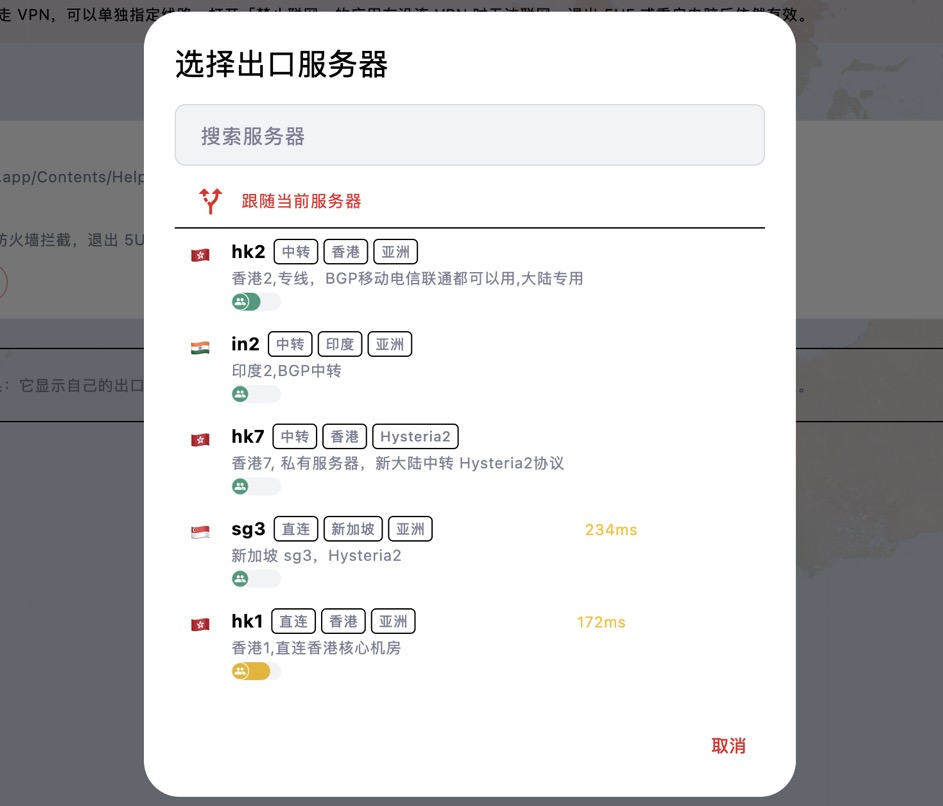
Two-hop chain: after choosing an exit server you can also choose a first-hop server. Traffic connects to the first hop, then through it to the exit server. Websites see the exit server's IP; the first hop only sees encrypted traffic. Both servers must be available for the app to go online.
To undo, choose "Follow current server". If the pinned server is no longer in the server list, the page says so and the app can't go online until you choose another one.
On desktop, how do I stop an app from going online without the VPN? (Block network on the Apps page)
Some apps (browsers, chat or trading apps) should only ever be used with the VPN, so they don't expose your real IP if you forget to connect. The Apps page in the Windows and macOS apps handles this.
How to set it up:
1. Open Apps in the navigation, or press Ctrl+3 (⌘3 on macOS).
2. Click Add app and choose the program.
3. Once added, all of this app's traffic goes through the VPN while connected, instead of following the rules.
4. If needed, turn on Block network under it. When it shows "Active", the app has no network access at all while the VPN is off.
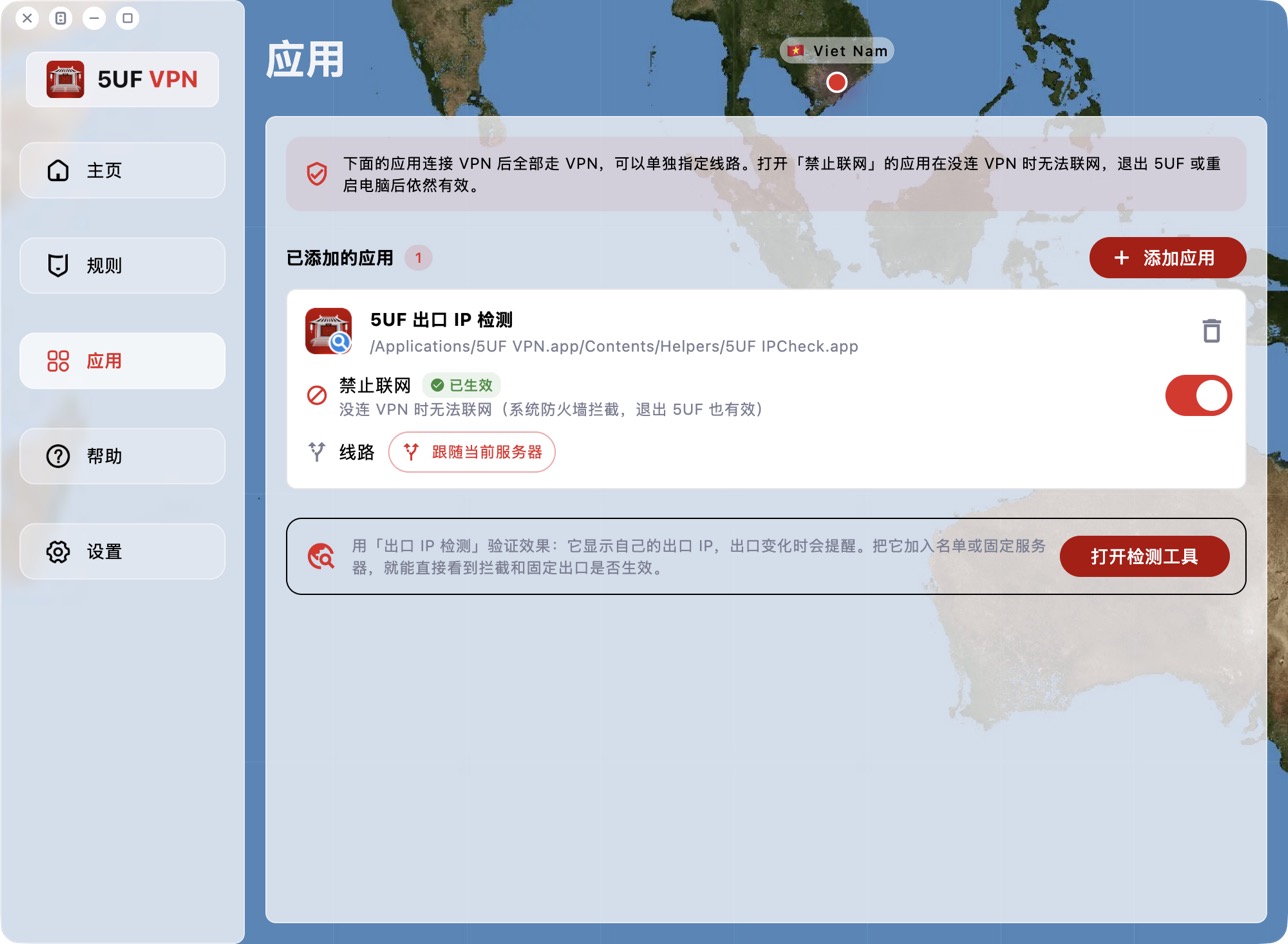
Block network is enforced by the system firewall, so it stays in effect after you quit 5UF or restart the computer. Turn the switch off or remove the app to restore normal access.
First time on macOS: Block network uses a macOS network filter extension. It's installed only the first time you turn the switch on; if you never use the feature, nothing is installed.
1. When macOS says the system extension was blocked, click Open System Settings in the app and turn on 5UF VPN under Network Extensions.
2. When macOS asks whether 5UF VPN may filter network content, click Allow.
The extension only blocks apps with Block network turned on; other apps are not affected.
Common messages:
• "One more step…": the network extension switch isn't on yet. Click Open System Settings and turn it on.
• "Blocking is not active… you chose Don't Allow": click Retry and choose Allow this time.
• "Please move 5UF VPN to the Applications folder first": macOS only lets apps in the Applications folder install extensions. Move it, then reopen 5UF.
To verify, use the Exit IP Check tool at the bottom of the page (see "How do I use Exit IP Check to see an app's exit IP?").
On desktop, how do I make specific apps bypass the VPN, or only send specific apps through it?
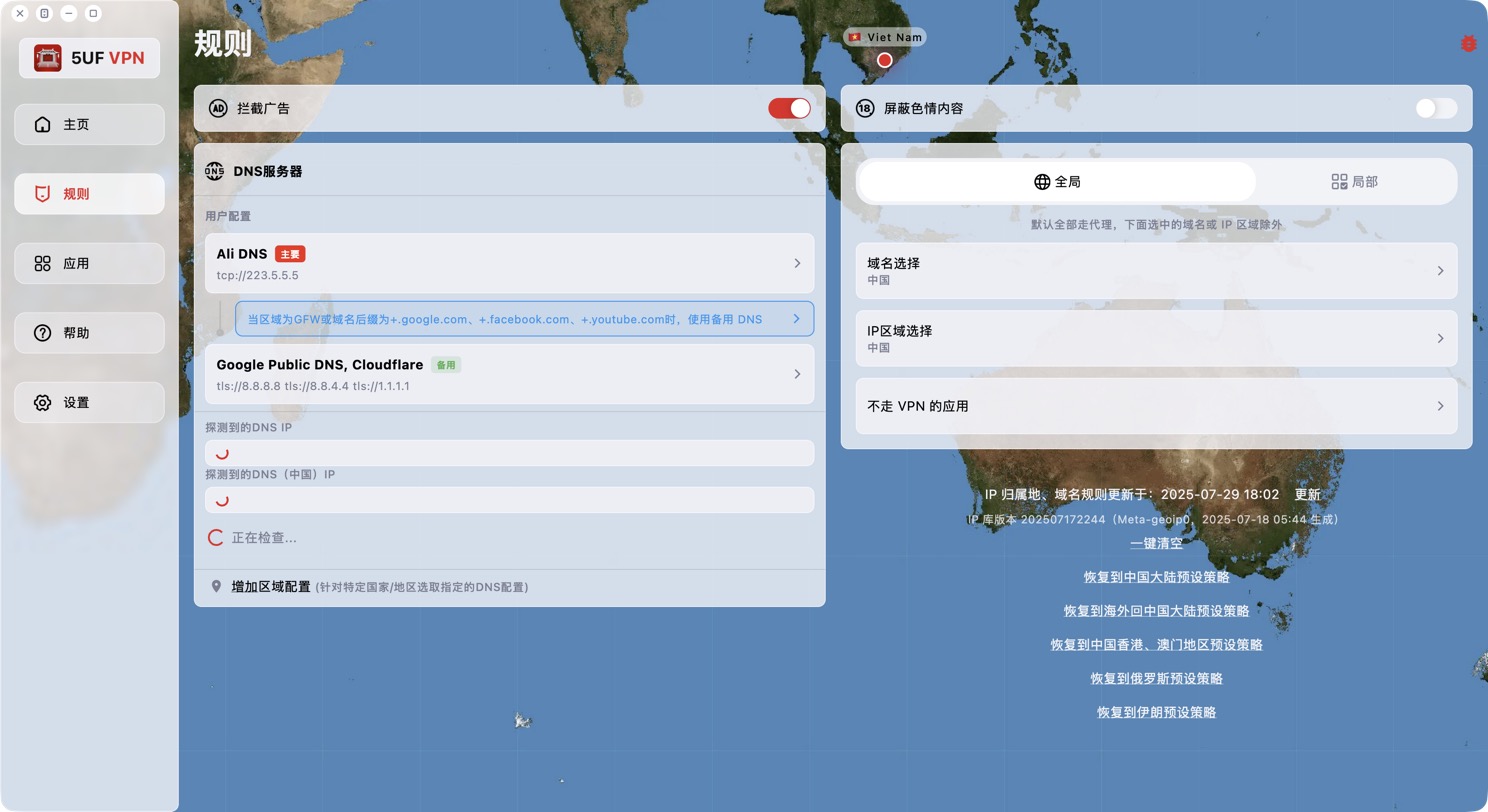
The Windows and macOS apps support per-app routing, set on the Rules page. What you choose depends on the current Global / Rule mode:
• Global mode: all apps use the VPN by default. The item is shown as "Apps that bypass the VPN"; apps you add use your local network directly, for example local banking, games or work software.
• Rule mode: traffic is split by domain and IP rules. The item is shown as "Apps that use the VPN"; all traffic from apps you add goes through the VPN regardless of the rules.
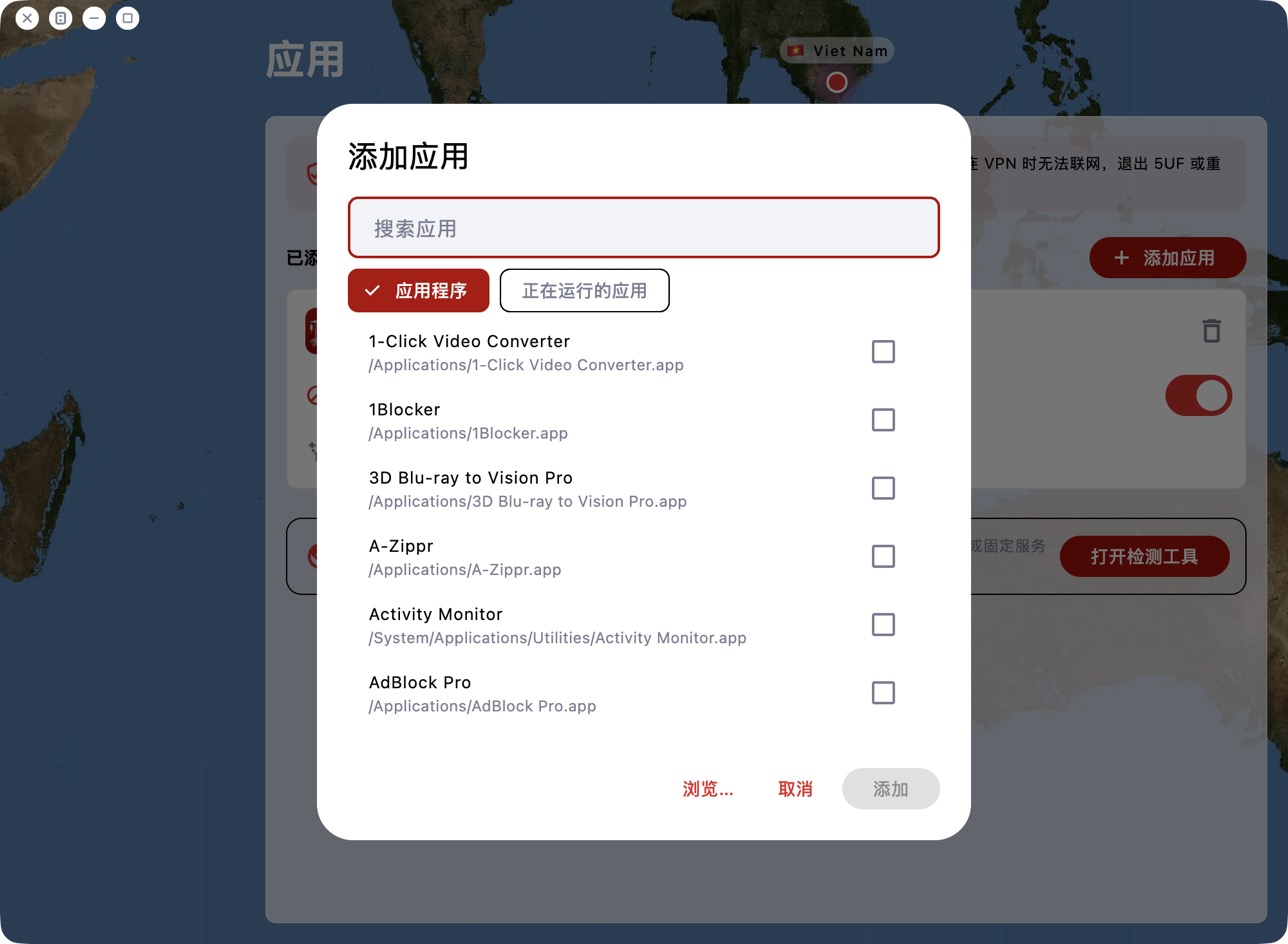
Adding apps: open the item and click Add app. Pick from Applications (Start menu on Windows) or Running apps, or click Browse… to choose a program, then click Add.
Changes take effect immediately, without reconnecting. The card at the top of the home screen shows the icons of routed apps. On macOS, choosing Safari also covers Safari's web content processes.
To clear the list, remove apps one by one; "Restore defaults" in Settings also clears it.
What if the new app does not run on Windows 7 or Windows 8?
The latest official 5UF VPN app for Windows is built and tested for newer Windows releases. On Windows 7 and Windows 8, which are largely out of mainstream support, you may see install failures, startup issues, or connection problems. We cannot guarantee the same experience as the new app on those systems in the near term.
If you must stay on an old Windows version, consider one of the following:
- Upgrade Windows to a supported release your hardware can run (for example Windows 10 or 11), then install the latest official app; or
- Use a legacy Windows build of our client where still supported (feature and security updates may lag; follow site or support guidance); or
- Use Super VPN (browser extension) for browser-based access; or
- Use a third-party VPN client with manual setup: How to use a third-party app with 5UF VPN on Windows (tutorial).
Whenever possible, we still recommend a supported OS + latest official app for the best stability and security.
How to Clear Cache Issues (Windows)
-
Close 5UF VPN completely
-
Make sure the application is fully exited.
-
Check the system tray and Task Manager to ensure no 5UF VPN processes are running.
-
-
Navigate to the cache folder
-
Open File Explorer and go to:
C:/Users/user/AppData/Roaming/com.top.wuf
-
Important: Replace user with your own Windows username, as that folder represents your account.
-
-
Delete all files inside this folder
-
Select all files and folders inside com.top.wuf and delete them.
-
This clears any cached data that may be causing issues.
-
-
Restart 5UF VPN with administrator rights
-
Right-click the 5UF VPN icon and choose Run as administrator.
-
This ensures the app can rebuild its cache properly and avoids permission issues.
-
✅ After this process, 5UF VPN should start fresh, without old cached data causing errors or slowdowns.
What to do if the Windows 5UF app cannot start or has cache issues
If the Windows version of 5UF APP does not respond, crashes, gets stuck, or fails to open, the cause is often damaged local cache data.
Recommended steps:
- Fully exit 5UF VPN and make sure no tray icon remains.
- Open
C:/Users/YourWindowsUsername/AppData/Roaming/com.top.wuf. - Delete the cached files in the
com.top.wuffolder. - Restart the computer.
- Right-click 5UF VPN and choose Run as Administrator.
If it still cannot start, contact support and provide your Windows version, device model, screenshot of the error, and the time when it happened.
If you are still using an older client, we recommend switching to the latest 5UF VPN app for better stability and compatibility.
How to fix the missing VCRUNTIME140_1.dll error (for 5UF VPN)
If 5UF VPN reports VCRUNTIME140_1.dll is missing, install the official Microsoft Visual C++ Redistributable below. Do not download DLL files from unofficial sites.
❗️Encountering This Error? Follow These Steps to Fix It
If you see the error message below, don’t worry. Simply follow the steps provided to resolve the issue quickly and easily.
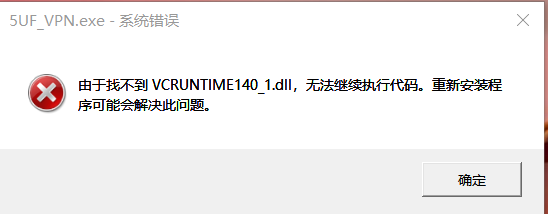
✅ Step 1: Go to the Official Microsoft Download Page
? Visit this official link:
? https://learn.microsoft.com/zh-cn/cpp/windows/latest-supported-vc-redist?view=msvc-170
This page contains the latest supported Visual C++ Redistributable installers.
✅ Step 2: Download the Correct File for Your Device
Scroll down to the section:
“Visual C++ Redistributable v14"
Then download the version(s) based on your system:
| Your Device Type | File to Download | Description |
|---|---|---|
| ?️ 64-bit Windows | vc_redist.x64.exe | For most modern systems; includes x64 and ARM64 binaries |
| ? 32-bit Windows | vc_redist.x86.exe | Needed for older systems or some 32-bit apps |
✅ Tip: If you're not sure, install both files to ensure full compatibility.
✅ Step 3: Install the Redistributables
-
Run each.exefile you downloaded
-
Follow the installation prompts
-
Restart your computer once finished
✅ Step 4: Launch 5UF VPN Again
After restarting:
-
Double-click to launch the 5UF VPN client
-
The app should now start normally without any DLL errors
❌ Important Warning
Do not download DLL files from third-party websites — they may contain malware or be outdated.
Always use the official Microsoft source linked above.
How to open 5UF VPN automatically at login (Windows)
Windows Setup Instructions for 5UF VPN Auto-Launch
Follow the steps below to configure 5UF VPN to start automatically when you log into your Windows account:
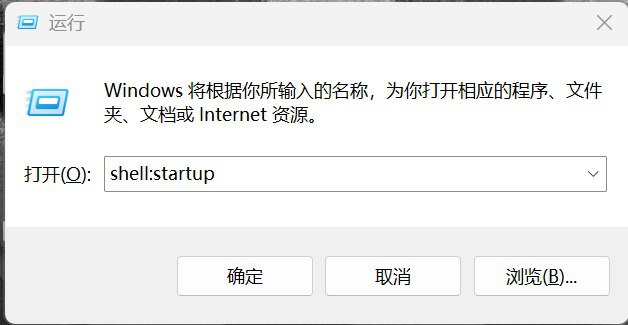
Step 1: Open the Run Dialog
Press the Windows + R keys simultaneously to open the Run dialog box.
Step 2: Access the Startup Folder
Type the following command into the Run box and press Enter:
shell:startup
This will open the Startup folder where programs that launch at login are stored.
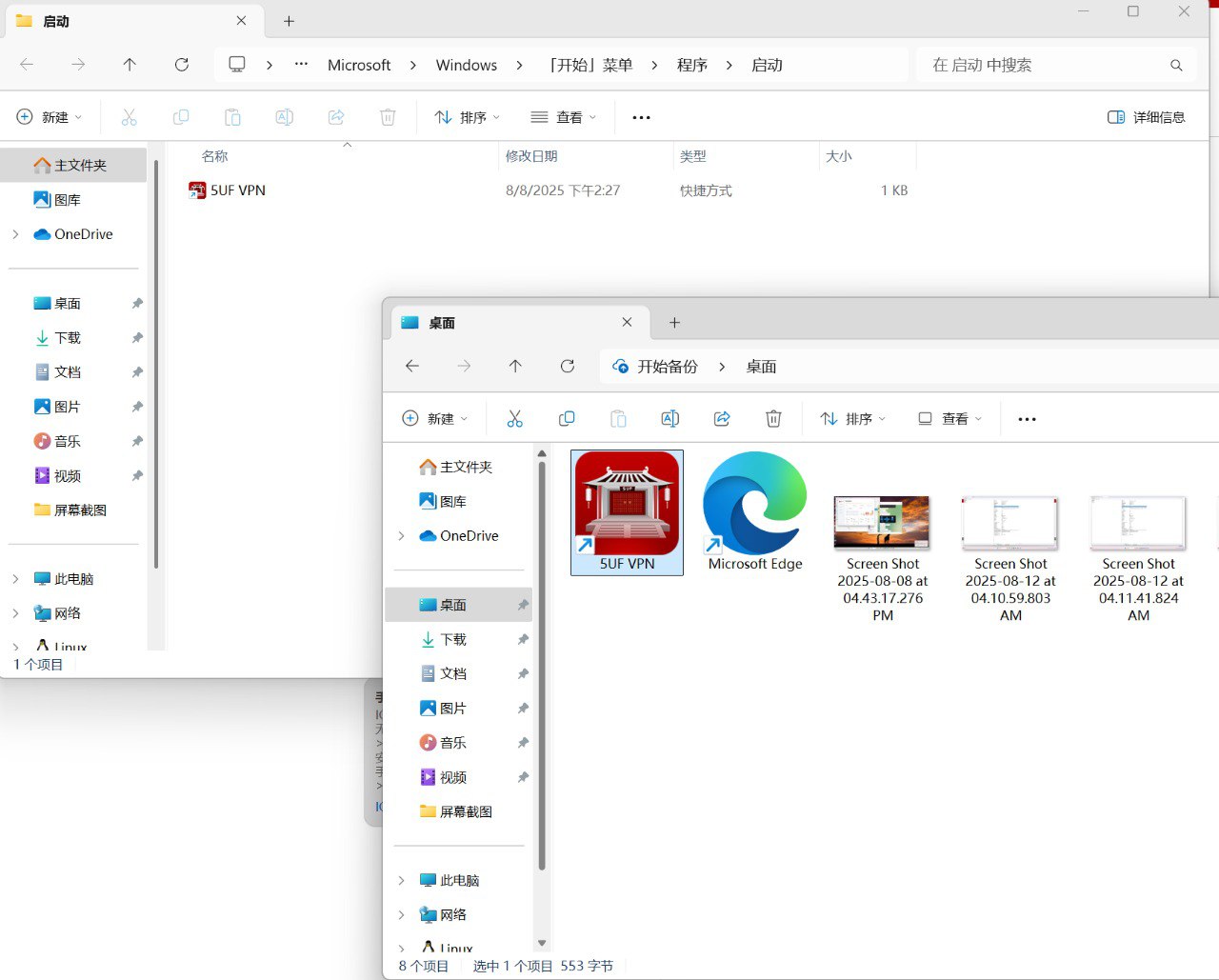
Step 3: Add 5UF VPN to Startup
Locate the 5UF VPN application executable or its shortcut on your computer.
Drag and drop the 5UF VPN shortcut into the Startup folder window. This action ensures the app will automatically launch every time you sign in.
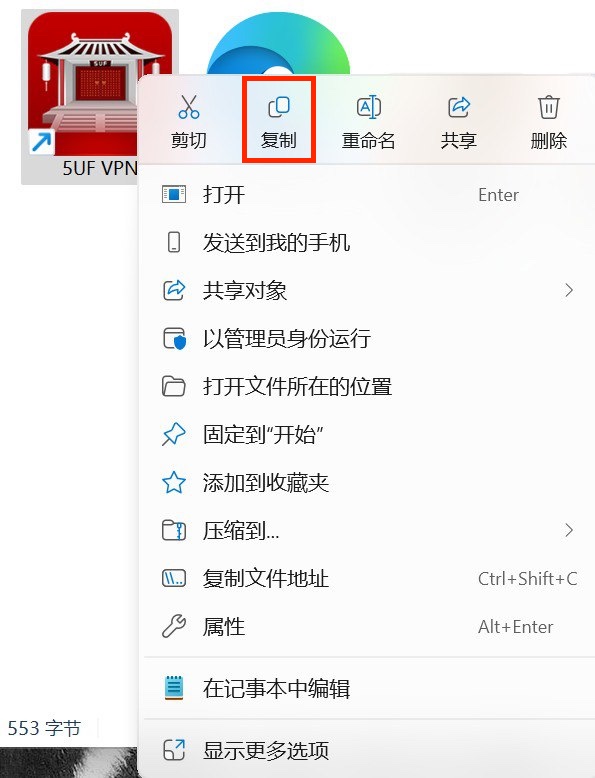
Additional Tips:
-
If you do not have a shortcut, right-click the 5UF VPN.exe file and select Create shortcut before moving it to the Startup folder.
-
To remove the app from startup, simply delete the shortcut from this folder.
How to confirm your Windows processor
Step 1: Verify Your Processor Architecture
For Windows Users
-
Open System Information
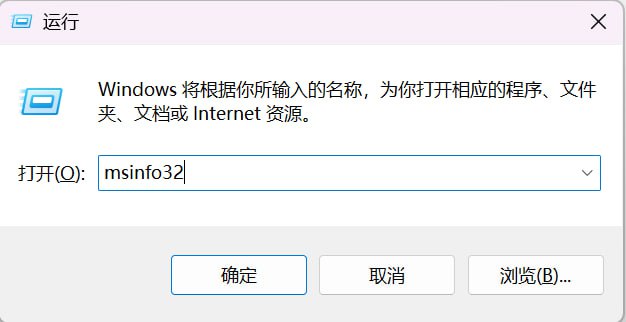
Press Windows + R, type msinfo32, and hit Enter.
-
Check System Type
-
If System Type shows “x64-based PC”, your processor supports AMD64 (x86-64) and is compatible with the standard Windows AMD64 version.
-
If System Type shows “ARM-based PC”, your device runs on an ARM processor and supports Windows ARM64.

Step 2: Access the Download Page
Open System Information
Press Windows + R, type msinfo32, and hit Enter.
Check System Type
If System Type shows “x64-based PC”, your processor supports AMD64 (x86-64) and is compatible with the standard Windows AMD64 version.
If System Type shows “ARM-based PC”, your device runs on an ARM processor and supports Windows ARM64.
Visit: /download_app
Step 3: Select Your Platform
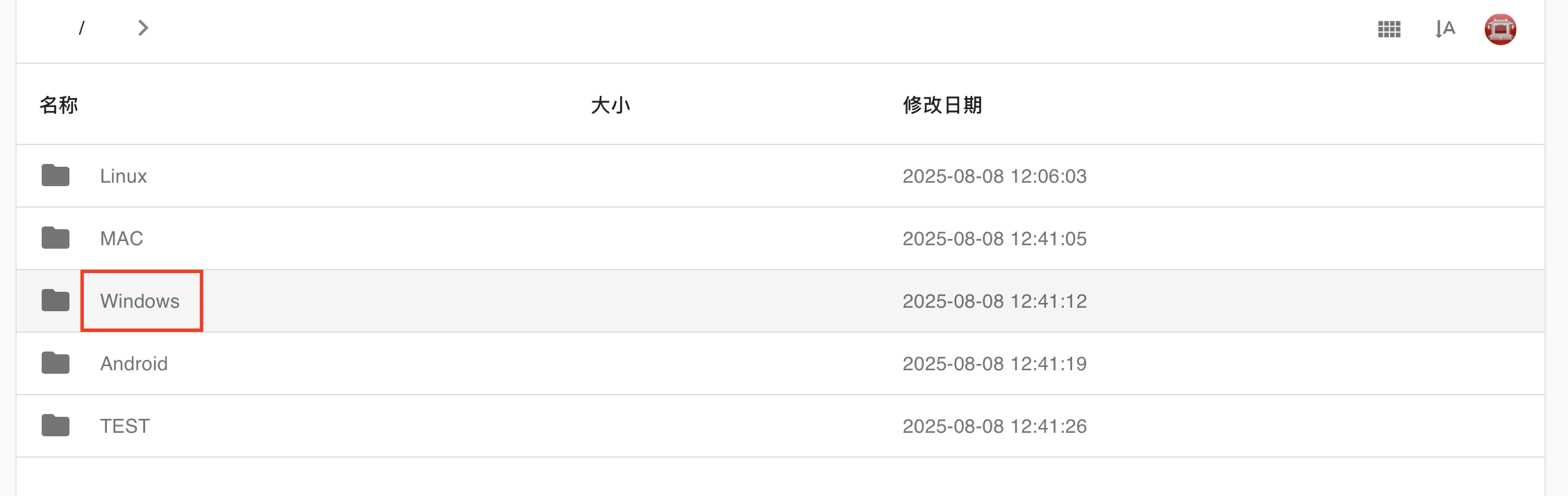
On the website, select Windows from the list of platforms.
Step 4: Download the Correct Version
-
For x64-based PCs, download the AMD64 version.
-
For ARM-based PCs, download the ARM64 version.

How to use Trojan (XRay) with windows
1. 下载客户端并安装
Clash for Windows
https://dl.clashforwindows.org/releases/latest/Clash.for.Windows.Setup.0.20.39.exe
更多其它端也可以在这里找:
https://dl.clashforwindows.org/releases/latest/
备用下载点:
Clash.for.Windows.Setup.0.20.39.exe
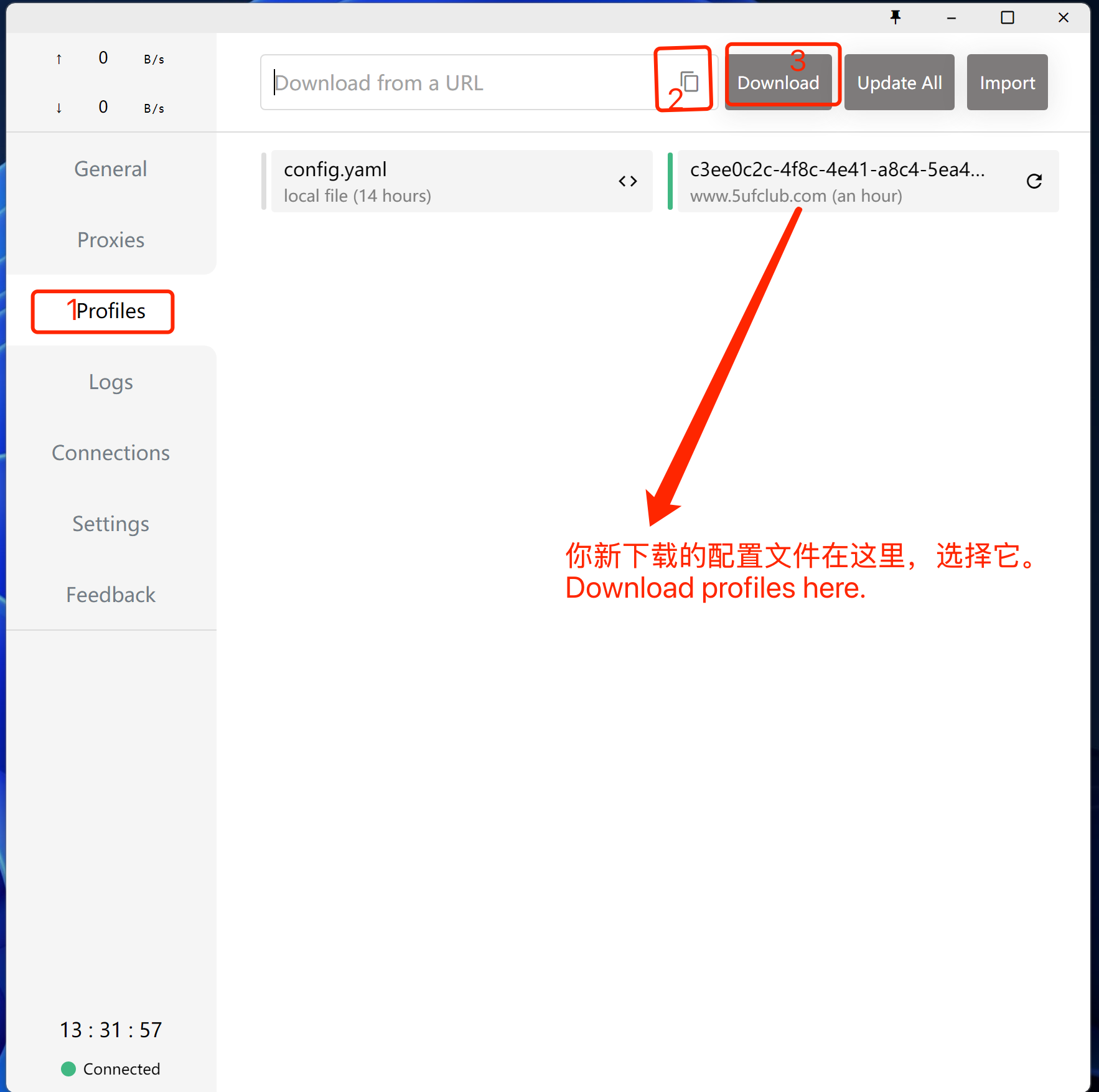
2. 点击导入
从我们的网站上获取订阅地址
3. 使用
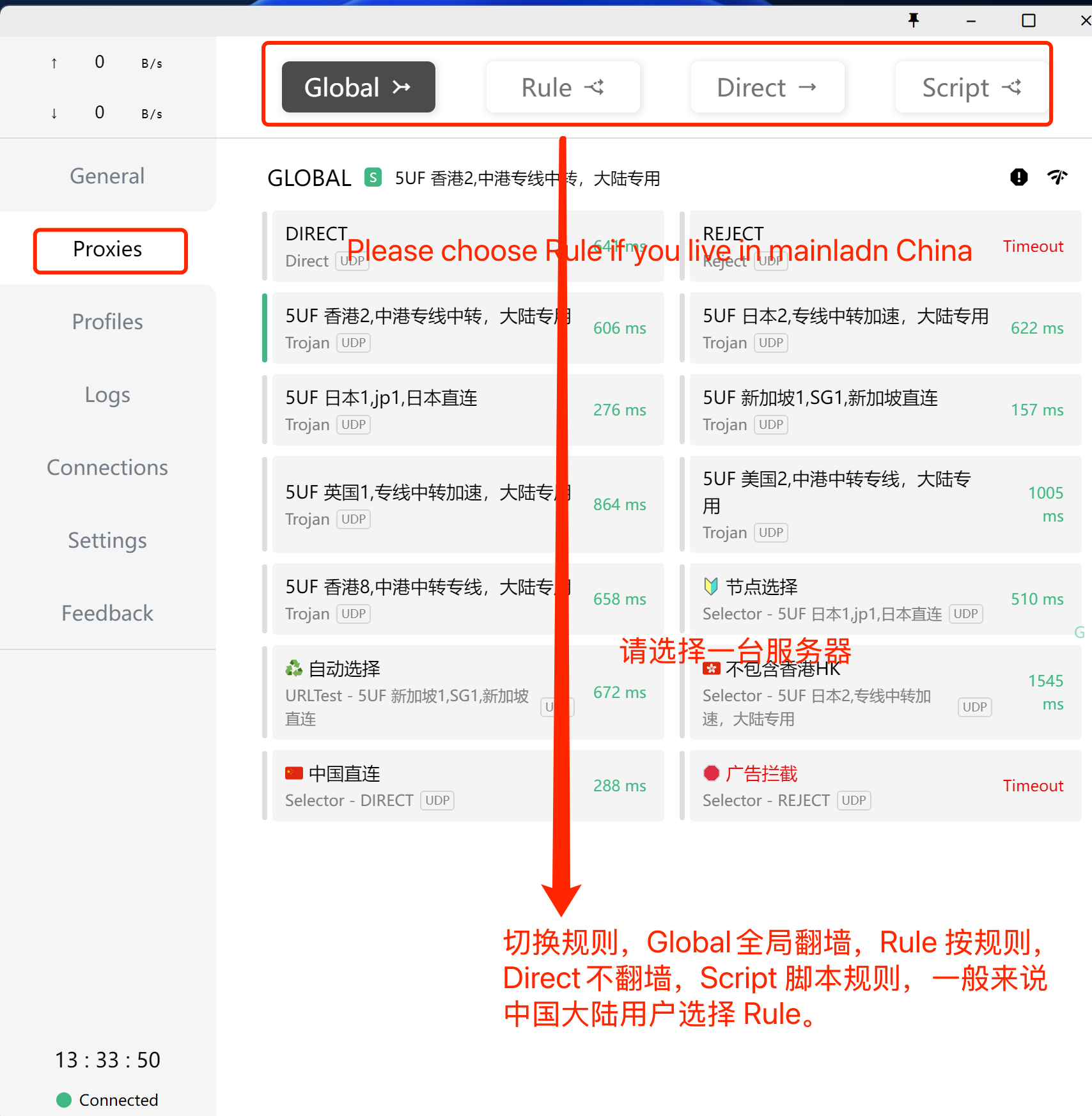
选择刚下载好的规则(如上图),选择好服务器(如下图),打开系统代理(下下图),开始使用。
打开系统代理,如下图:
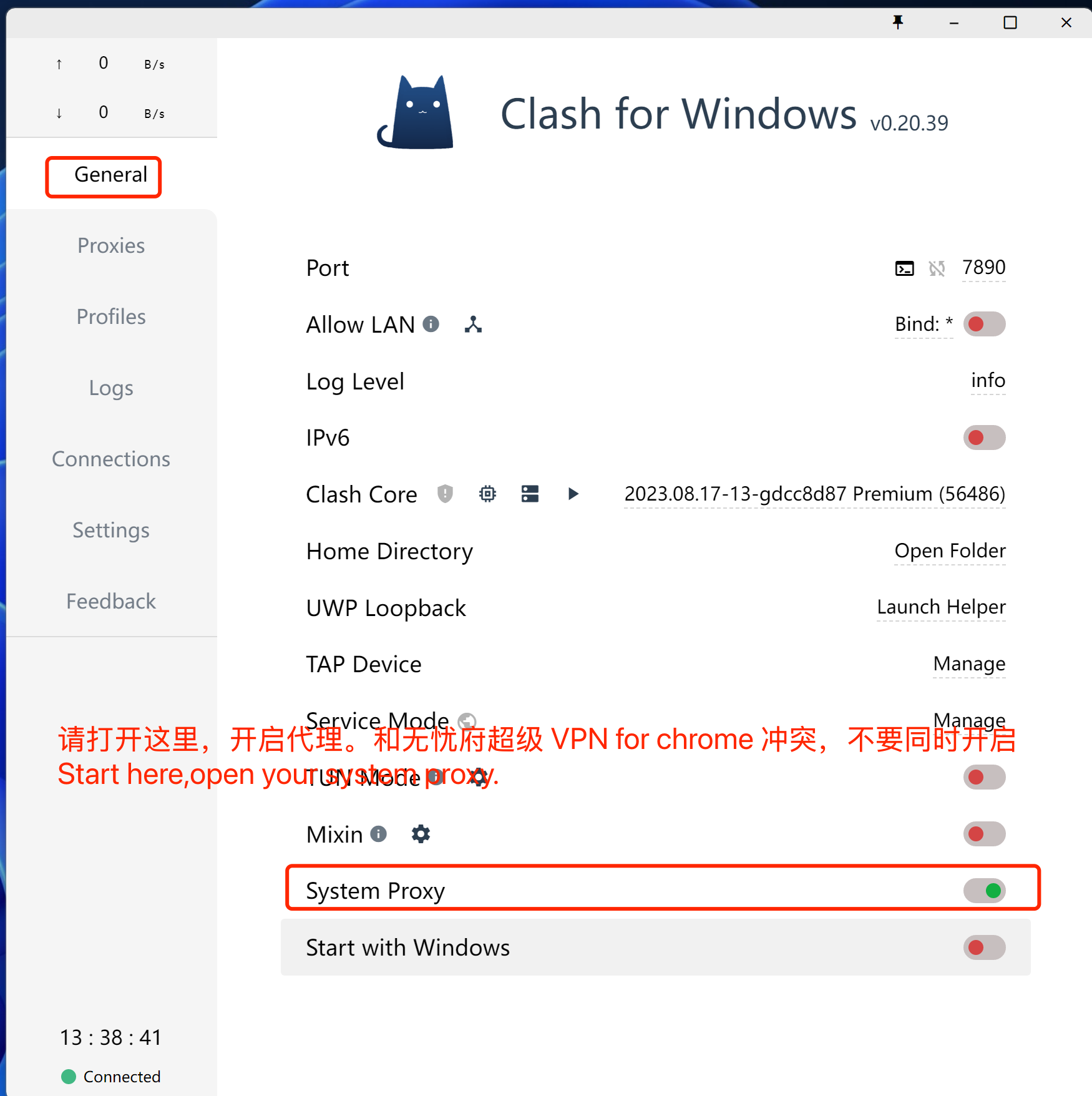
注意事项,如果你的浏览器同时使用无忧府超级 VPN for Chrome 插件时,这里的代理会失效,同理,其它代理类的软件都不能同时生效,你要先禁用插件,或者换一个浏览器。
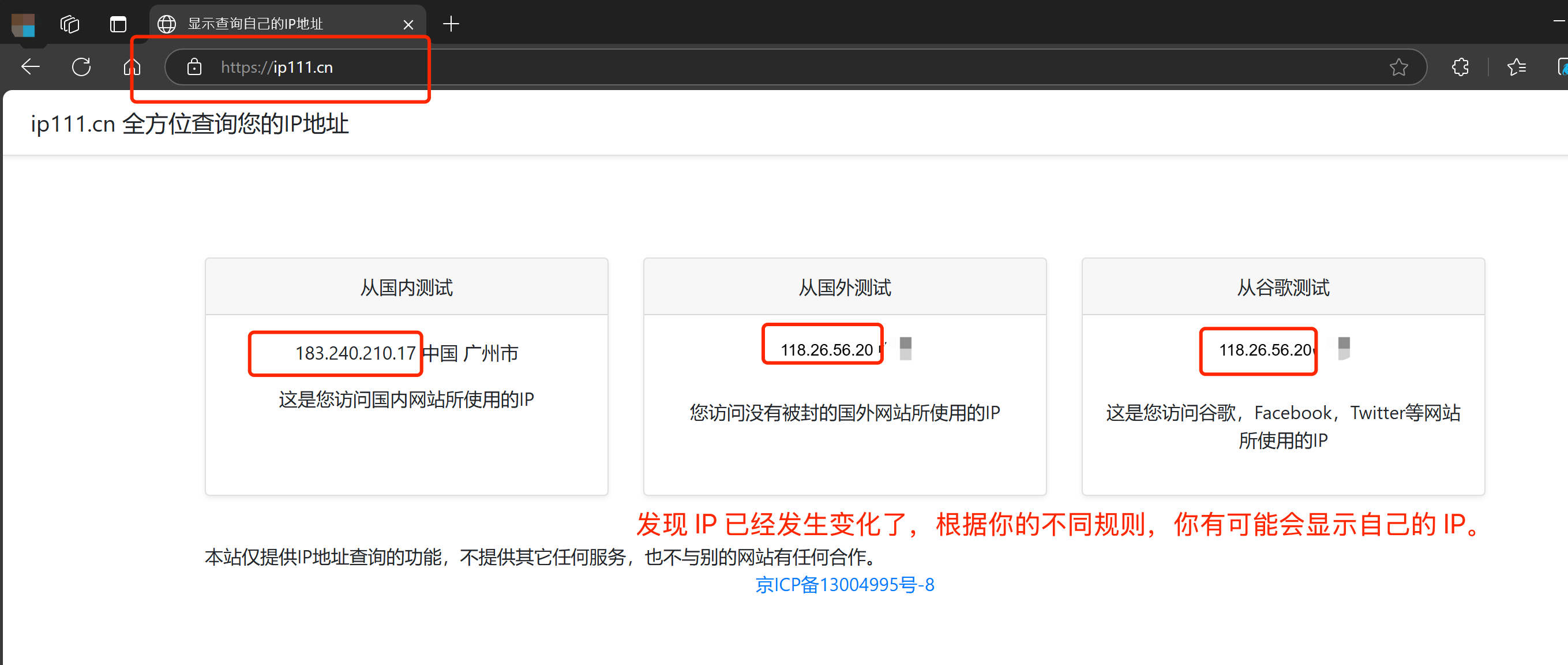
打开网址:https://ip111.cn